

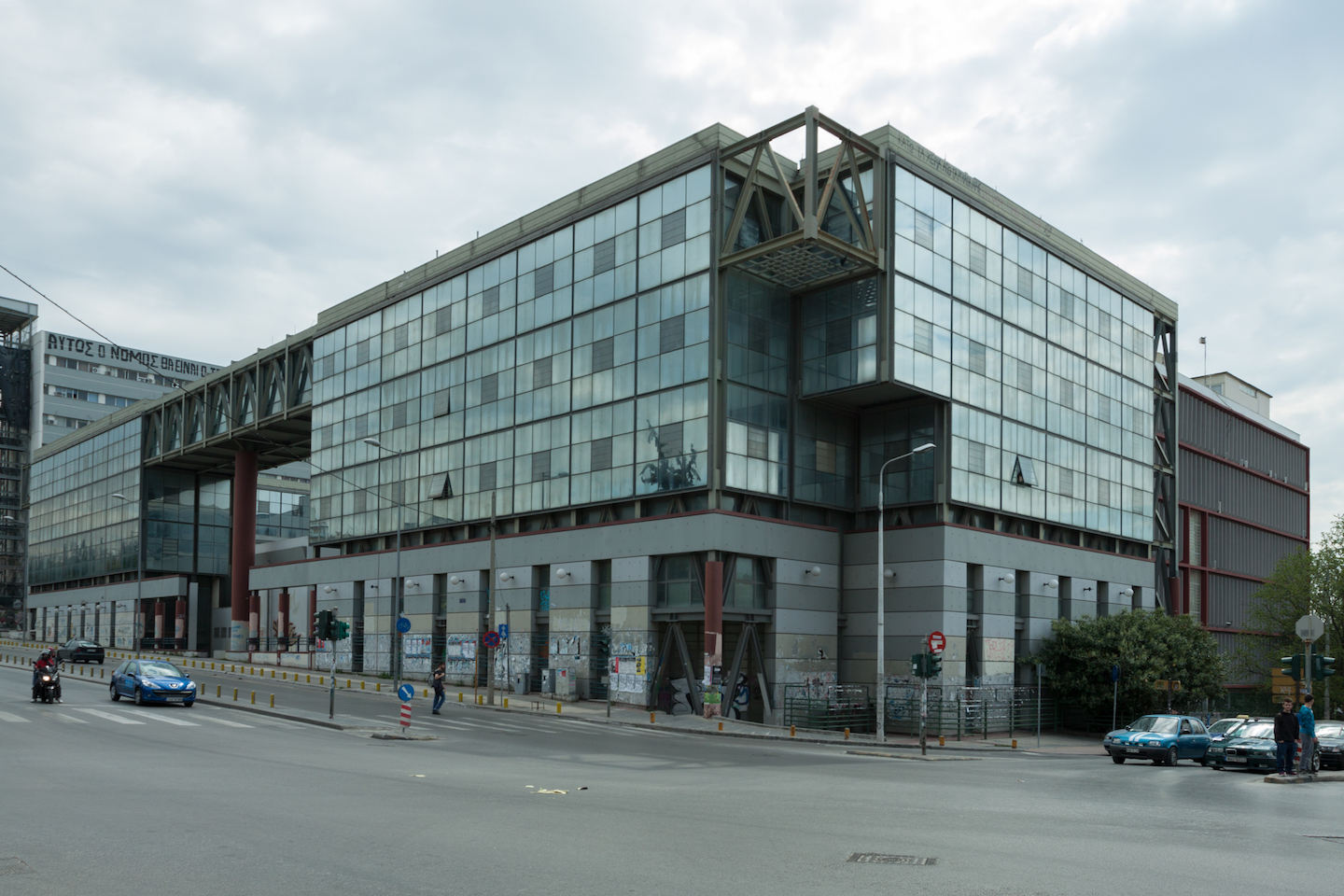
The Department of Physics of the Aristotle University of Thessaloniki is one of the first departments of the University of Thessaloniki and began operating in the academic year 1928-29. Today, it belongs to the School of Sciences together with the departments of Mathematics, Geology, Biology, Informatics and Chemistry and is based in the old and new building of the Faculty of Physics northwest of the Aristotle University of Thessaloniki campus. It employs 50 faculty members, 22 members of the Academic Staff, 3 members of the Academic Staff and 6 members of the Administrative Staff.
The Department is divided in 5 section areas:
- Astrophysics, Astronomy and Mechanics
- Nuclear Physics and Elementary Particle
- Condensed Matter And Materials Physics
- Electronics and Computers
- Applied Physics and Environmental Physics
Over 700 active students are enrolled in the undergraduate program, while the Department also supports the following postgraduate programs:
- Electronic Physics
- Advanced Functional Materials
- Physics of the Atmospheric Environment and Global Change
- Computational Physics
- Subatomic Physics and Technological Applications
- Nanosciences and Nanotechnologies (Interdepartmental)
The Department of Physics conducts high-level research and is ranked among the highest in the Aristotle University of Thessaloniki in terms of funding from research projects. The established laboratories of the Department of Physics are the following:
1. Laboratory of Astronomy. It deals with issues of Astrophysics, Cosmology, Observational Astronomy, Gravitational Waves and Extraplanetary Systems. In its main area (Observatory) it has a 16” telescope array with full accessory equipment (digital cameras, PC, software) for education and research. It also has a multiprocessing system for the analysis of signals from large Gravitational Wave detectors.
2. Laboratory of Theoretical Mechanics and Astrodynamics. It deals with research on issues of Dynamical Systems and Celestial Mechanics with theoretical and computational methods as well as with observations and analysis of orbits of space satellites and with optical satellite communications programs. It has two multiprocessor computer systems and three astronomical stations with full equipment (automatic and remote operation systems, digital cameras, PCs for controlling the devices and transferring and storing data).
3. Electronic Physics Laboratory. It deals with the development of Electronic Measurement and Control Systems, the design of Analog/Mixed Integrated Circuits and the design of Digital Integrated Circuits and Systems.
4. Laboratory of Radio Communications. It deals with radio communications and Telecommunications. It has environmental radiation recorders and devices for simulating the operation of telecommunications systems and networks. It also deals with biomedical technology issues and has portable equipment for measurements of radiofrequency radiation absorption by human body tissues (SAR).
5. Laboratory of Atmospheric Physics. Its research activity extends to a wide range of subjects such as the solar radiation in the atmosphere, the composition of the atmosphere, optical properties of atmospheric gases and suspensions, air quality, climate changes and their interactions with the atmosphere, changes and physics of the ozone layer, etc. It has many measurement devices, a Brewer spectrophotometer, a lidar scanner, etc.
6. Laboratory of Nonlinear Circuits-Systems and Complexity. It deals with the study of nonlinear electrical circuits and their applications in synchronization, cryptography and the control of robotic systems. It has digital oscilloscopes, signal generators and image recording systems.
7. Electron Microscopy and Structural Characterization of Materials Laboratory. The mission of the laboratory is to provide scientists with the necessary equipment for the structural characterization of materials, at the micro- and nano-scale, as well as services related to electron microscopy. It has a JEOL 2011 High Resolution Transmission Electron Microscope, a conventional Transmission Electron Microscope, an Atomic Force Microscope (AFM), etc.
8. Optics and Spectroscopy Laboratory. It serves the fields of Optics, Optical Information Processing, Photonics and Spectroscopy in the Visible and X-Ray regions. It has Raman and luminescence spectroscopy devices, Lasers (Ar+, Kr), diffractometers, interferometers, a series of microscopes, etc.
9. Laboratory of Theoretical and Computational Solid-State Physics. It deals with computational simulations, mathematical modeling and development of algorithms for the study of solid state phenomena and complex networks. It has facilities for High Performance Computing (parallel processing and artificial learning).
10. Laboratory of Atomic and Nuclear Physics. It deals with research in Nuclear Physics, Elementary Particle Physics (also known as High Energy Physics), Astroparticle Physics, and their applications. It has radiation detection devices, computational structures for processing and analyzing experimental data, devices for measuring active interaction cross sections. There is also close cooperation in CERN experiments.
11. Laboratory of Accelerator Systems and Instrumentation. The purpose of the laboratory is to provide laboratory support for undergraduate and postgraduate education in Accelerator Physics and Particle Detector Physics, as well as to support research for the development of accelerator methodology/technology and instrumentology for new particle detector devices. It has access to the CERN Axion Solar Telescope device, detector manufacturing devices, etc. It has a GRID technology computing node for the analysis, movement and storage of data and develops data analysis methods and the necessary software for the study of elementary particle interactions.
12. Laboratory of Advanced Materials and Devices. It deals with the physicochemical characterization and study of materials and devices, the development-synthesis of advanced materials and the study of cultural heritage projects. It has FTIR – UV/VIS spectroscopy devices, electrical measurement devices, Thermal Scanning Calorimetry Device (DSC), Thermogravimetric Analysis Device (TGA) etc.
13. Magnetism and Magnetic Materials Laboratory. It deals with research that is part of the broader scientific field of Materials Physics & Technology with emphasis on Magnetism. It has a vibrating sample magnetometer, a Mößbauer 57Fe spectroscope, electronic and ionic conductivity measurement devices, and a magnetic hyperthermia device.
14. Laboratory of Didactics of Physics and Educational Technology. The aim of the Lab is the application of best practices according to the state of the art in the subjects of Teaching of Physics and Educational Technology, contribute to them through research and their utilization for the benefit of the students of the department and for the professional development of in-service educators.

contact : info@physics.auth.gr , τηλ. +30 2310 998140